Table of Contents
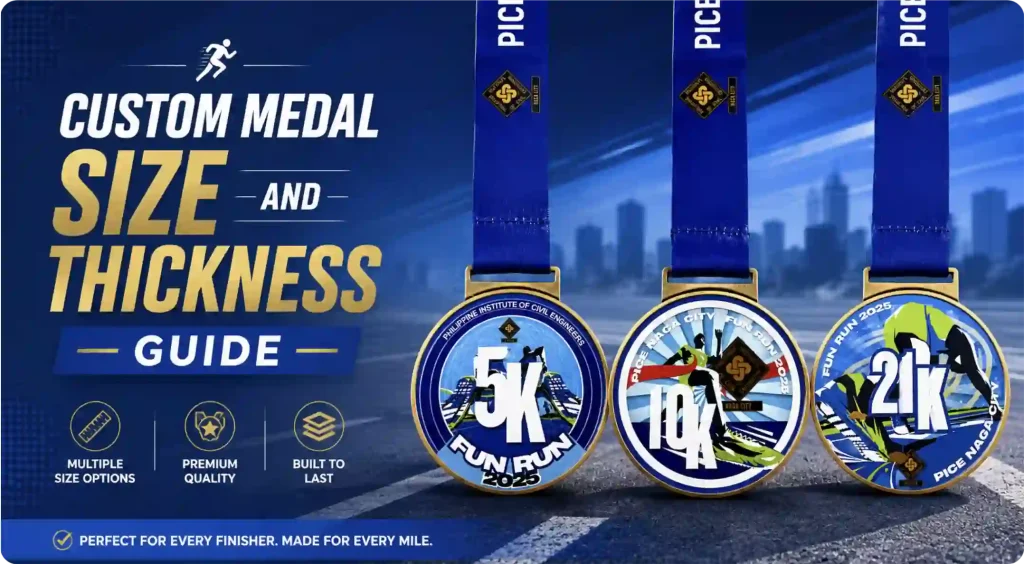
For many participants, receiving a medal at the finish line is about more than where they placed. It becomes a reminder of the time, effort, and commitment they put into the event. Custom medals are also commonly used for graduations, academic achievements, corporate recognition, and other special occasions.
The right size and thickness give you enough room for the event name, logo, date, and artwork while keeping the finished piece comfortable to wear.
Based on the orders we produce at VeperPins, 2.5 inches wide and around 3 mm thick is a solid starting point for most designs. It offers enough space for the key details, has a satisfying weight, and does not feel overly heavy.
In this guide, we’ll look at the most common size and thickness options and explain how to choose the right combination for your project.
Common Medal Sizes
Custom medals can be made in almost any size, but most orders fall within three general ranges.
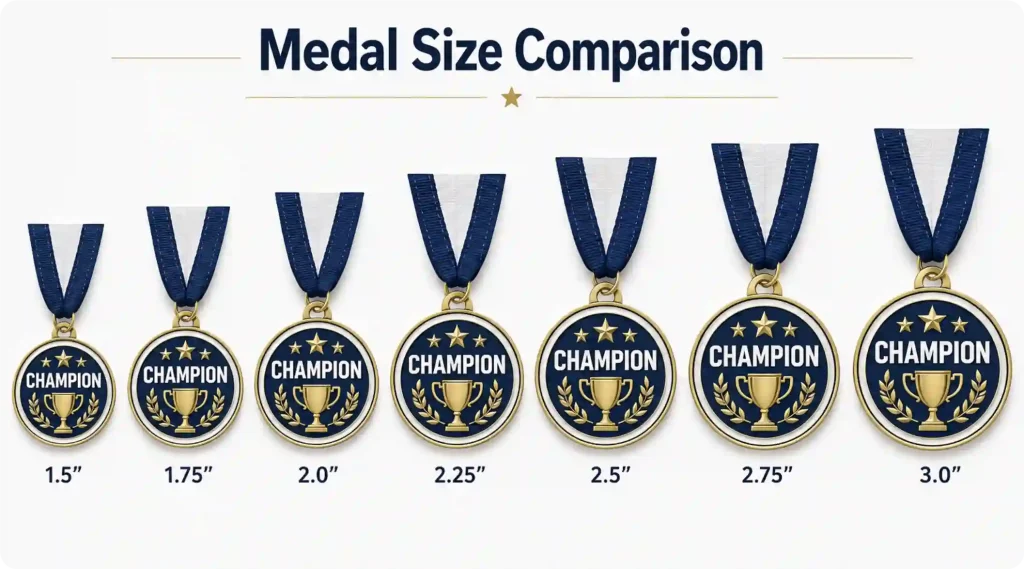
Small: 1.5–2 Inches
Smaller medals are lighter and usually more affordable. They work well when the design only includes a logo, date, or a few short lines of text. Because the surface area is limited, small lettering and detailed artwork may need to be simplified.
Standard: 2–3 Inches
This is the most common size range. It offers a good balance between design space, readability, weight, and cost. A 2.5-inch medal is often large enough for an event name, logo, year, and additional design details without feeling bulky.
Large: Over 3 Inches
Larger medals provide more room for detailed artwork, multiple lines of text, and stronger 3D effects. They also stand out more during an award ceremony or in photos. The tradeoff is additional weight and a higher production cost.
Common Medal Thicknesses
Thickness affects the edge profile, weight, overall feel, and the amount of depth available for raised or recessed details.
Thin: 1.5–2 mm
This thickness creates a lighter medal with a slimmer edge. It can work for simple designs and budget-focused projects, although it may feel too light when paired with a larger diameter.
Standard: 2–4 mm
This is the most common range and offers a comfortable balance of weight and durability. A thickness of around 3 mm works well for most 2D artwork and standard raised metal details.
Thick: Over 4 mm
Thicker medals have a more noticeable edge and a heavier feel. They also provide more room for deep relief and 3D artwork. As thickness increases, so do the metal weight and overall cost.
Common Size and Thickness Combinations
The following combinations are practical starting points for standard round medals:
- 1.5 inches (about 38 mm): 2–2.5 mm thick
- 2 inches (50.8 mm): 2.5–3 mm thick
- 2.5 inches (63.5 mm): 3–4 mm thick
- 3 inches (76.2 mm): 4–5 mm thick
- 4 inches (101.6 mm): 5–6 mm thick
These are not fixed rules. A simple flat design may not need much thickness, while deep relief, double-sided 3D artwork, or a large medal may require a thicker base.
Round medals are measured by diameter. Custom-shaped medals are normally measured across their longest side, but the overall width, height, and proportions should also be considered.

What to Consider When Choosing a Medal Size
Type of Event
Different events call for different sizes. Sports competitions and major commemorative events often use standard or large medals for greater visual impact. Academic and corporate awards usually work well at a standard size, while youth events may benefit from a smaller and lighter medal.
Amount of Content
Start by looking at everything that needs to appear on the medal. A logo, date, and short message may fit comfortably on a small medal. An event name, location, sponsor logos, or several lines of text will need more room.
Design Complexity
Fine lines, small lettering, portraits, buildings, and deep-relief artwork need enough space to remain clear. The more detailed the artwork is, the less practical it becomes to reduce the medal size.
Medal Shape
Round and square medals are easy to size by diameter or width. Custom shapes require more attention to their overall proportions. A long or narrow design may need to be enlarged even when the artwork itself is simple.
Budget
Larger medals use more metal, so they usually cost more to produce. For a large order, even a small increase in size can add up quickly, so it’s a good idea to understand what affects custom medal pricing before finalizing your design.
Weight and Comfort
A large medal can feel impressive and display well, but it may become uncomfortable when worn for a long time. Smaller medals are lighter and easier to wear, carry, and store.
Choosing a Size for Different Uses
School and Corporate Events
Small or standard medals usually provide enough space for a school crest, company logo, award title, and date. They also stay light enough to wear comfortably and help keep larger orders within budget.
Organized Sports Events
Standard or large medals are usually a better fit. Sports medals often need room for the event name, logo, year, category, and sponsor information, so the design area can fill up quickly.
Personal Keepsakes and Collections
Larger or thicker medals are worth considering when appearance and detail matter more than wearing comfort. The extra space makes it easier to add layered artwork, deeper relief, custom text, and other personal elements.

Other Tips for Choosing a Medal
Think About Photos and Social Sharing
Many participants will share photos of their medals on Instagram, Reddit, and other social platforms. When planning the artwork and text placement, make sure the main logo and event name are easy to see, whether the medal is being worn or photographed on its own.
Look at Similar Events
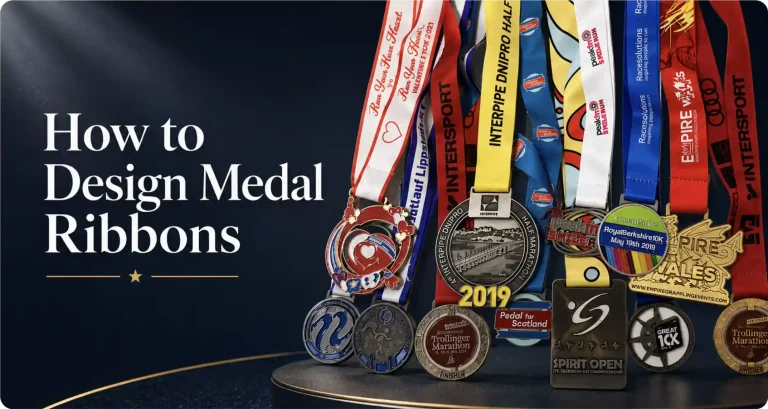
Reviewing medals from events of a similar type and size can give you a useful starting point. It helps you judge whether a small, standard, or large medal will feel appropriate for your own event.
Make Award Levels Easy to Tell Apart
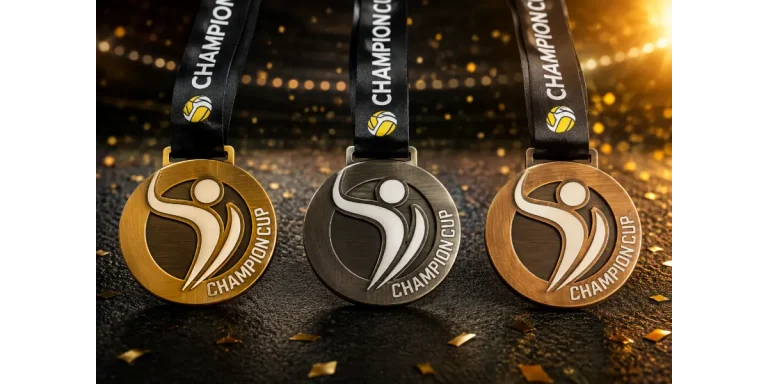
First, second, and third place should be easy to identify. Gold, silver, and bronze finishes are the most common solution, but you can also use different ribbon colors, wording, or enamel details without creating three completely separate molds.
Where Can You Order Custom Medals?
Creating custom medals that both organizers and recipients will appreciate takes some planning. The finished piece needs to match the occasion, show the artwork clearly, and feel worth keeping. Once the size and thickness are set, choosing the shape, colors, finish, and manufacturing process becomes much easier.
VeperPins has more than 20 years of manufacturing experience. Whether you’re planning a running event, graduation, military commemoration, corporate award, or personal keepsake, our team can help you choose the right specifications and guide your project from artwork to final production.