Table of Contents
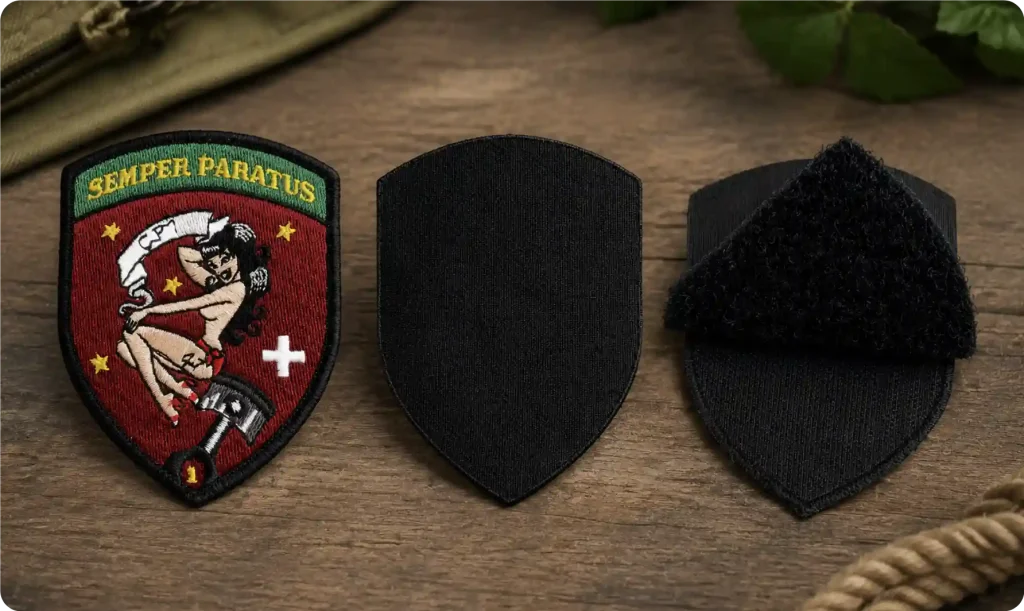
Custom Velcro patches are easy to remove, replace, and move between uniforms, hats, backpacks, jackets, and tactical gear. Unlike sew-on or iron-on patches, they do not have to stay permanently attached.
They are commonly used for name tapes, unit insignia, team logos, company branding, morale patches, and other designs that may need to be changed regularly.
This guide covers the main patch types, common uses, ordering process, design tips, backing options, and basic DIY methods.
What Are Custom Velcro Patches?
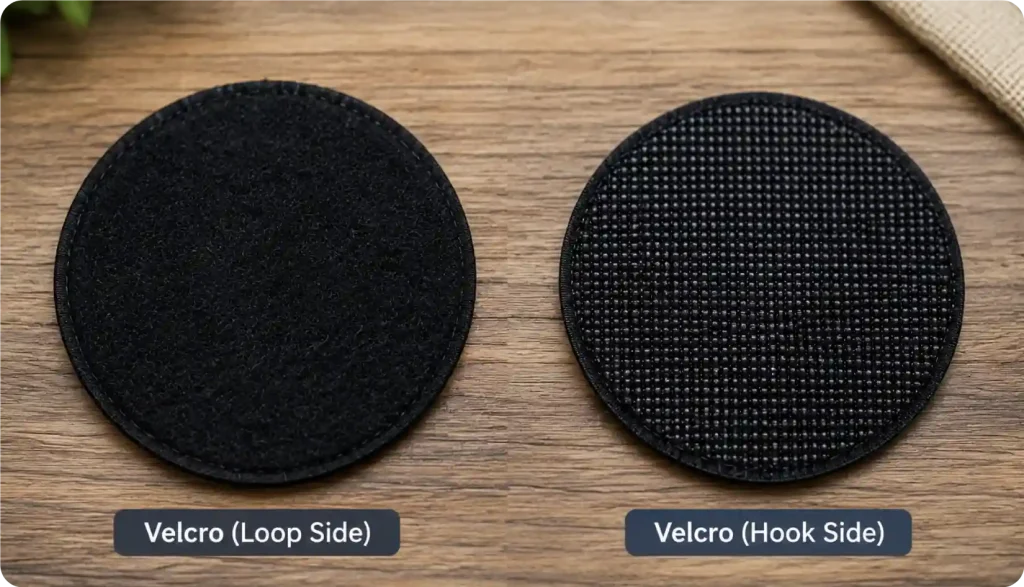
Custom Velcro patches use a two-part hook-and-loop fastening system.
The rough hook side is attached to the back of the patch, while the soft loop side is sewn onto the clothing or equipment. When the two sides are pressed together, the hooks catch the loops and hold the patch in place.
The patch can then be removed and replaced without cutting stitches or permanently attaching it to the fabric.
Technically, VELCRO® is a registered trademark of Velcro Companies. The general name for this type of fastening system is hook-and-loop.
There is no standard size for every patch. The right dimensions depend on where it will be used.
Patches for hats, chest areas, and name tapes are often around 2 to 4 inches wide. Shoulder and sleeve patches are commonly between 3 and 4 inches. Larger designs for jackets or tactical vest back panels may reach 10 to 12 inches.
Before ordering, measure the available loop panel to make sure the finished patch will fit properly.
Types of Custom Velcro Patches
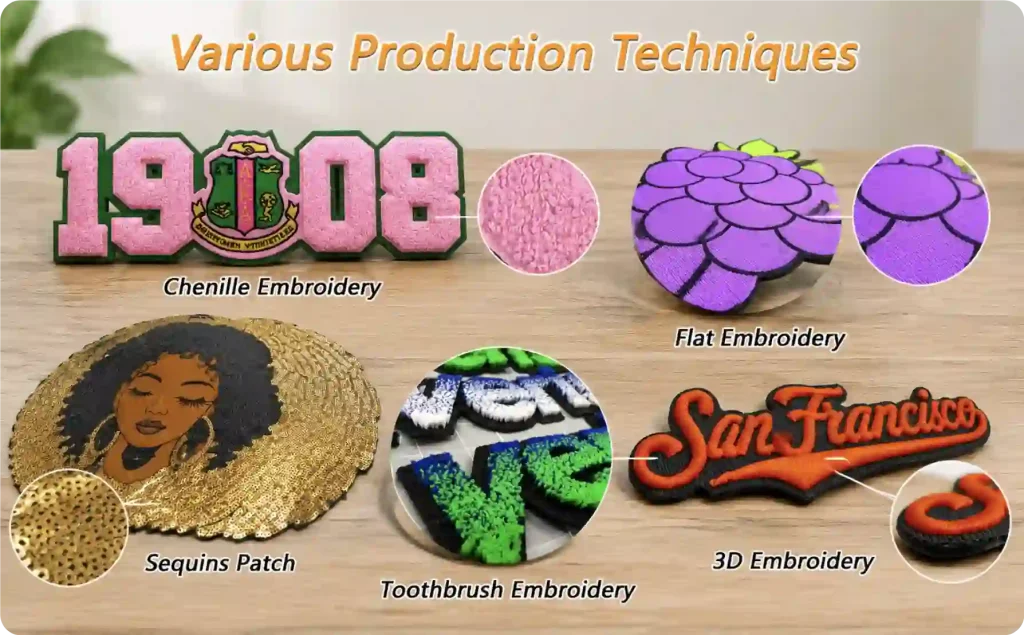
The best patch type depends on the artwork, level of detail, intended use, and the look you want.
Woven Velcro Patches
Woven patches have a smooth, flat surface and can reproduce finer details than traditional embroidery.
They are a good choice for:
- Small text
- Thin lines
- Detailed logos
- Designs that need a clean, flat finish
Embroidered Velcro Patches
Embroidered patches have a raised thread texture and a classic appearance.
They work well for:
- Simple logos
- Bold lettering
- Team emblems
- Uniform patches
- Unit insignia
For small embroidered designs, thicker lines and fewer details usually produce a clearer result.
Printed Velcro Patches
Printed patches are better for artwork that cannot be reproduced clearly with thread.
They are often used for:
- Gradients
- Detailed illustrations
- Small color changes
- Photographic artwork
- Designs with many colors
Chenille Velcro Patches
Chenille patches have a soft, fuzzy surface and a bold, vintage look.
They are commonly used for:
- Large letters
- School logos
- Varsity designs
- Team names
- Retro-style artwork
PVC Velcro Patches
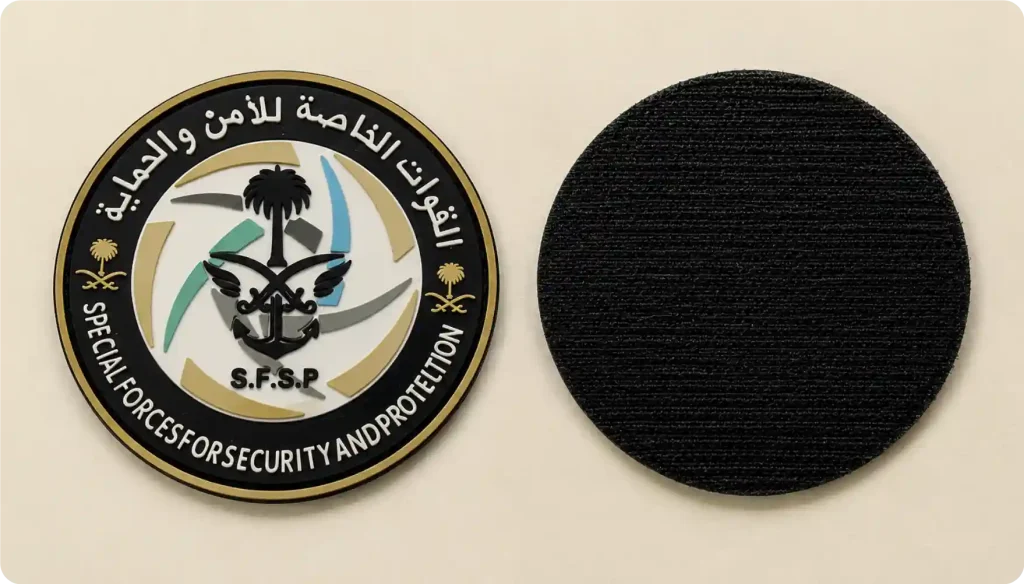
PVC patches are flexible, water-resistant, and easy to clean.
They are a practical option for:
- Tactical gear
- Outdoor equipment
- Backpacks
- First-aid kits
- Wet, dusty, or muddy environments
Who Uses Them?
Custom Velcro patches are especially useful when a name, logo, rank, or design needs to be changed without replacing the entire garment or piece of equipment.
Military and Law Enforcement
Military units and law enforcement teams use them for name tapes, call signs, flags, ranks, unit insignia, and identification patches.
The removable backing makes it easy to move the same patch between uniforms, helmets, plate carriers, and other gear.
Tactical and Outdoor Users
Hook-and-loop patches are often added to range bags, hiking backpacks, medical kits, tool bags, and tactical equipment.
PVC is especially popular for outdoor use because it handles moisture and dirt well.
Airsoft Players and Patch Collectors
Morale patches are common in airsoft, gaming, outdoor, and collecting communities.
They allow people to display team identity, humor, interests, or achievements and swap the design whenever they like.
Companies, Clubs, and Teams
Businesses and organizations use removable patches on employee uniforms, event clothing, team gear, jackets, and promotional products.
They are also useful when staff members share uniforms or need to remove branding before washing.
Fashion and Streetwear
Custom Velcro patches can be added to hats, hoodies, jackets, bags, and other clothing.
Because they can be changed easily, one garment can be used with several different designs.
How to Order from VeperPins
Ordering from VeperPins takes four main steps.
Step 1: Send Your Design
Upload your artwork through our online quote page and include the size, quantity, patch type, and any other requirements.
You do not need to have finished artwork. You can also send us:
- Your logo
- Text
- Reference images
- Preferred colors
- A photo of the intended placement
- A description of your idea
Our design team will review the information and prepare it for production.
Step 2: Review the Quote and Artwork
We normally provide a detailed quote within eight hours.
The quote will include the size, quantity, production method, unit price, and any additional costs.
After the price is approved, we will prepare the artwork. The first digital proof is usually ready within 12 to 24 hours.
You can check:
- Spelling
- Colors
- Shape
- Size
- Border style
- Artwork placement
- Hook backing coverage
- Whether a matching loop side is needed
Changes can be made before production starts.
Step 3: Approve the Sample
After the artwork is approved and payment is completed, we will arrange production.
A pre-production sample can be shown through photos or video before the full order is made.
You may also request a physical sample. In that case, sample shipping costs will apply.
Bulk production will begin after the sample has been confirmed.
Step 4: Inspection and Delivery
Once production is complete, we inspect the patches before packing.
Our team checks:
- Artwork
- Colors
- Size
- Shape
- Border
- Backing position
- Edge quality
- Overall consistency
Orders are normally shipped by DHL, FedEx, or UPS.
Shipping is free to the United States, Canada, and the United Kingdom. Customers in other countries can contact their sales representative to ask about current shipping discounts or free-shipping offers.
Design Tips for Custom Velcro Patches
Before choosing a patch type or size, think about where it will be used.
A hat, uniform, backpack, and tactical vest may all require different dimensions, materials, and backing coverage.
Before ordering, tell the manufacturer:
- Where the patch will be attached
- How much space is available
- How often it will be removed
- Whether it will be used outdoors
- Whether it may be exposed to rain, sweat, dust, or mud
- Whether the gear already has a loop panel
- Whether you need the hook side only or a complete hook-and-loop set
Keep Small Designs Simple
For patches under 3 inches, avoid very small text, thin lines, and crowded details.
These elements may look clear on a screen but become difficult to reproduce with embroidery.
Simple artwork, larger lettering, and slightly thicker lines usually produce a cleaner patch.
Use Strong Color Contrast
The background and text should be easy to separate visually.
Light lettering on a dark background, or dark artwork on a light background, is easier to read from a distance.
This is especially important for name tapes, team markings, and uniform identification.
Choose PVC for Outdoor Use
If the patch will regularly come into contact with rain, sweat, dirt, or mud, PVC may be a better option than fabric.
It is easy to wipe clean and does not absorb moisture in the same way as embroidered material.
Check the Loop Panel Size
Do not choose the patch size based only on the artwork.
Measure the loop panel on the hat, uniform, backpack, or tactical gear first. The finished patch should sit within the available space without hanging over the edges.
Use Enough Hook Coverage
The hook material should cover most of the back.
If the backing is too small, the edges may lift, especially on hats, sleeves, and other curved surfaces.
Larger, heavier, or frequently removed patches usually need fuller backing coverage.
Order Extra Loop Pieces When Needed
The rough hook side is normally attached to the patch. The soft loop side is sewn onto the garment or gear.
If your equipment already has a loop panel, you may only need the patch with hook backing.
If you plan to move one patch between several jackets, uniforms, or bags, you can order extra loop pieces and sew one onto each item.
Other Patch Backing Options
Velcro backing is only one way to attach a custom patch. Other options include:
Sew-on: Best for permanent attachment.
Iron-on: Applied with heat and pressure.
Adhesive: Easy to use and better for temporary placement.
The best option depends on the fabric and whether you need to remove the patch later.
Can I Make a Velcro Patch at Home?
Yes. DIY is possible when you only need one or two patches.
Start with a finished fabric patch and a sheet of hook material. Cut the hook backing slightly smaller than the patch so it does not show around the edges.
A simple method is to:
- Place the hook material on the back
- Use a small amount of adhesive to hold it in position
- Sew around the outside edge
- Attach it to a loop panel
- Check whether the corners lift
The backing is often the hardest part of a DIY project.
Glue may hold at first, but repeated removal, bending, heat, or washing can cause it to separate. Sewing around the edge usually gives a more reliable result.
The hook backing should also cover enough of the patch. If it is too small, the patch may lift away from the surface, especially when attached to a hat or another curved item.
DIY works well for personal projects and small tests. For detailed logos, custom shapes, or larger quantities, professional production usually provides cleaner edges, stronger backing, and more consistent sizing.
Ready to Custom Velcro Patches?
Whether you need patches for an event, company, team, uniform, or personal project, removable backing makes it easy to change the design whenever needed.
VeperPins can help prepare your artwork, recommend the right patch type, and check the colors, size, border, and backing before shipment.
Contact us today to receive 20% off your first order.


