Table of Contents
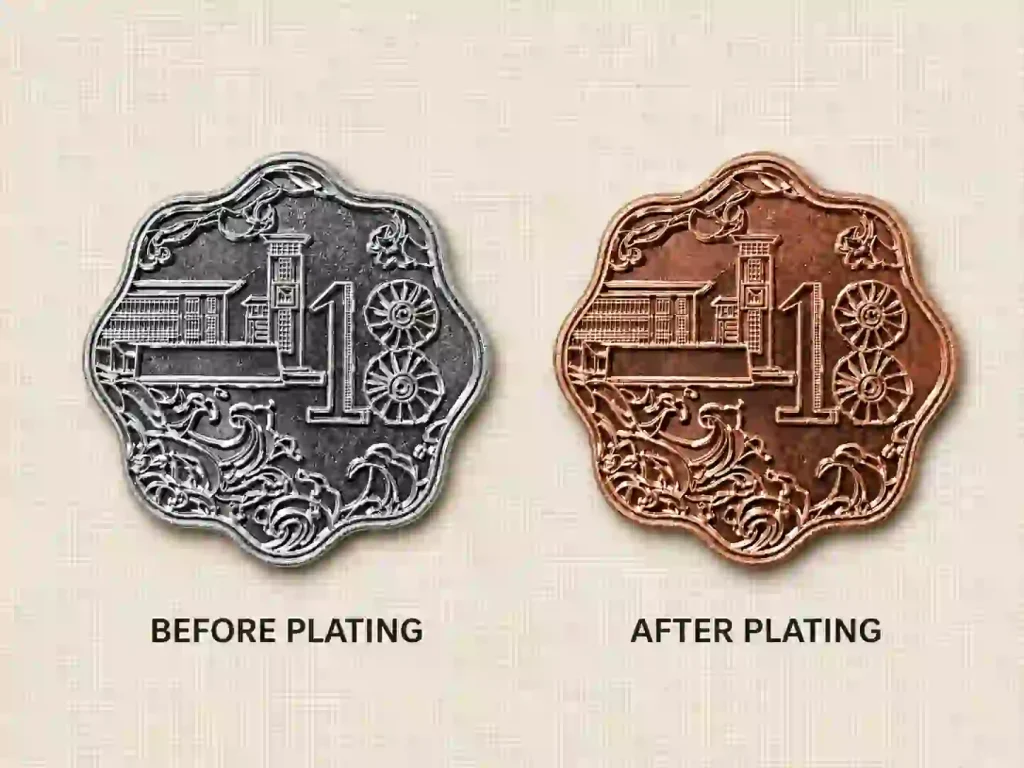
When you make custom lapel pins, it is easy to focus on the artwork, size, and enamel colors first. But plating is just as important. It can change the whole look and feel of the pin.
The same design can look completely different with a different plating finish. Gold feels brighter and more formal, silver looks clean and simple, black nickel gives a stronger look, and antique finishes feel more classic. If you want something more eye-catching, rainbow plating can also be a fun choice.
So plating is not something you should just pick at the very end. It is better to think about the style you want first, then choose the finish that matches that look.
Let’s go through the common plating options one by one.
What Is Plating on Lapel Pins?
Plating is basically like giving the metal parts of a lapel pin their final “outer coat.”
After the pin shape is made, it is not really finished yet. The exposed metal still needs a surface finish, and that finish is what we call plating. Once the plating is done, the pin can have different metal looks, such as gold, silver, black nickel, antique finish, and more. It also makes the whole pin look more complete.
One thing to keep in mind: plating is not the same as enamel color or printed color. The red, blue, white, or other colors inside the design are usually made with enamel or printing. Plating mainly affects the exposed metal parts of the pin.

Why Is Plating Important?
Because it has a big effect on how the final pin looks and feels.
Without plating, the pin may already have its shape, but it still looks like a half-finished metal piece. The metal surface can feel raw, rough, and unfinished. It does not have that clean, complete look you expect from a proper lapel pin.
And plating is not only about looks. Lapel pins are worn, touched, packed, shipped, and sometimes kept for years. A good plating finish helps the metal surface look cleaner, last better, and avoid looking dull, rough, or oxidized too quickly.
So plating is not just a small step at the end. In the whole custom pin process, it is one of the key steps that turns a raw metal piece into a finished, premium-looking custom pin.
Where Does the Plating Show on Lapel Pins?
A lot of customers ask us this when they order custom lapel pins for the first time:
“What exactly is plating? If my pin already has colors, why do I still need plating? And where can I see it?”
That is a very normal question. To make it easier to understand, we also prepared a reference picture, so you can follow along while we explain it.
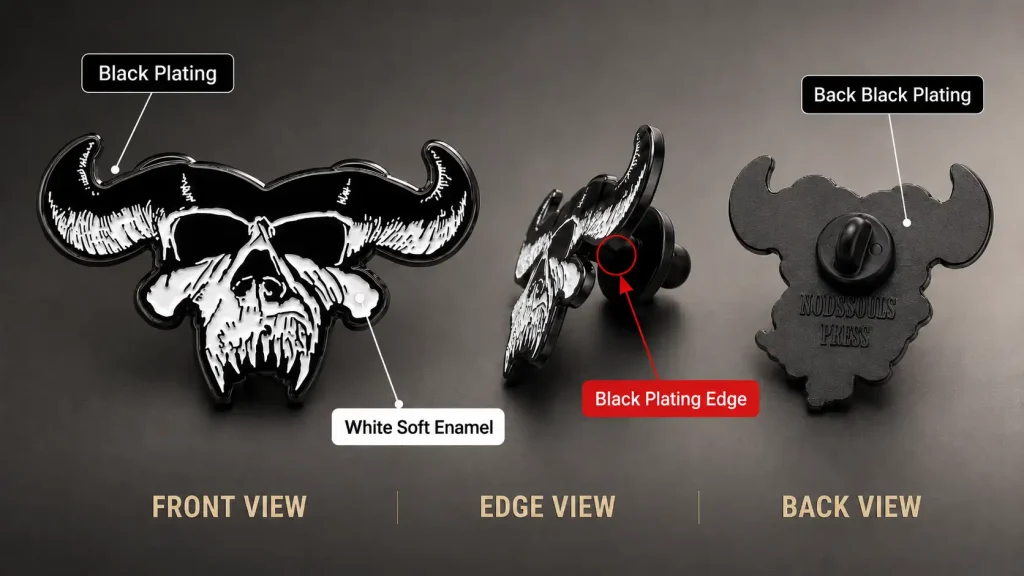
Plating does not show up like soft enamel or hard enamel colors. It does not usually cover large color areas on the front of the design. Instead, you will see it on the exposed metal parts of the pin, such as the raised metal lines, outer edge, side, and back.
To put it simply, enamel colors fill the colored parts of the design, while plating gives the metal parts their finish and overall feel.
So if you are not sure where the plating is, just pick up a pin and look at the exposed metal areas. Those parts will usually tell you what plating finish was used.
Plating Colors You Can Choose From
When you order custom lapel pins from VeperPins, you are not limited to basic gold or silver plating. We can make classic metal finishes, as well as more eye-catching custom finishes like blue, purple, rainbow plating, and more.
Not sure which one to choose? The options below will help you compare.
Polished Plating Finishes
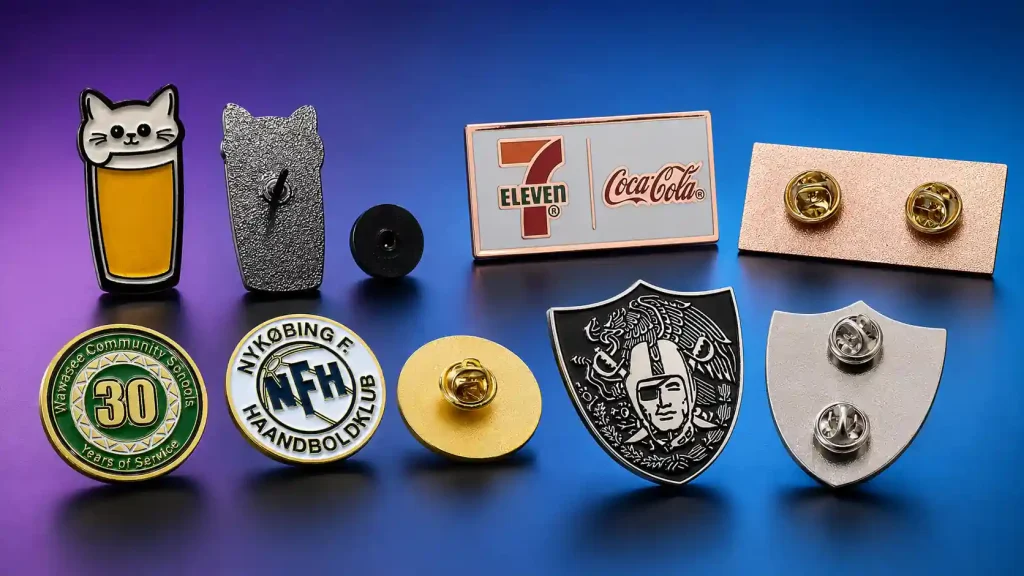
Polished plating is one of the most popular choices. The look is pretty straightforward: the metal areas are brighter and more reflective, so the finished pin feels cleaner and more polished at first glance.
Common polished finishes include polished gold, polished silver, polished copper, and black nickel. These finishes do not have that aged or vintage look. They are brighter, cleaner, and more formal. So if you are making company logo pins, event designs, membership pieces, or a more premium-looking style, polished plating is usually a great fit.
We often recommend polished plating if you are making soft enamel, hard enamel, or printed designs. It works especially well when the artwork is clean and the colors are simple. Once the pin is finished, the whole piece feels more polished and more on-brand. When your employees, members, or customers receive it, they can tell it was made with care, not just made as a cheap giveaway.
One thing to keep in mind: polished plating is shiny, so if your design has a large open metal area, small scratches may show more easily than they would on antique finishes. For this kind of design, we usually suggest balancing the shiny metal with enamel colors or a sandblasted background. It helps the pin look more comfortable, cleaner, and better over time.
Antique Plating Finishes
Antique finishes are a good choice if you do not want your design to look too shiny or too new.
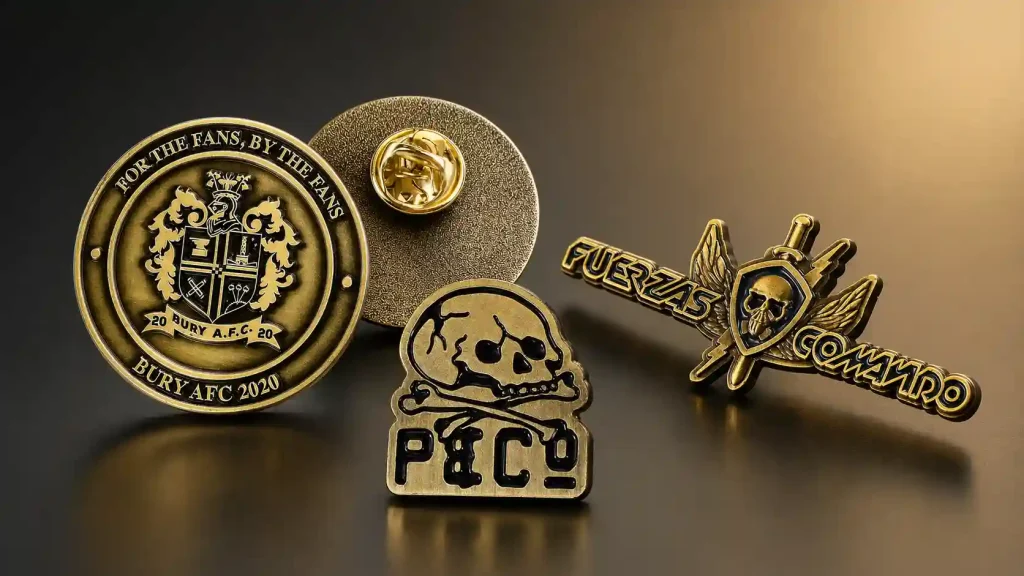
Common options include antique gold, antique silver, antique copper, antique nickel, and similar finishes. Compared with polished plating, they look darker and a little more aged. The overall feel is more classic, more serious, and not as flashy.
Many customers choose this style for military, police, club, memorial, or vintage-inspired designs. One nice thing about an antique finish is that it naturally adds contrast. The recessed areas look darker, while the raised details stand out more clearly, so the artwork is easier to see.
You can still use this finish with enamel or printed details, but from our experience, it works best for die struck designs or artwork with a lot of raised metal detail. If the design does not use many colors, an antique finish can actually make it look stronger.
It is not the kind of finish that grabs attention by being bright. It stands out because of its depth, contrast, and old-school metal look. For the right design, it can make the whole piece feel more solid and memorable.
Two-Tone Plating
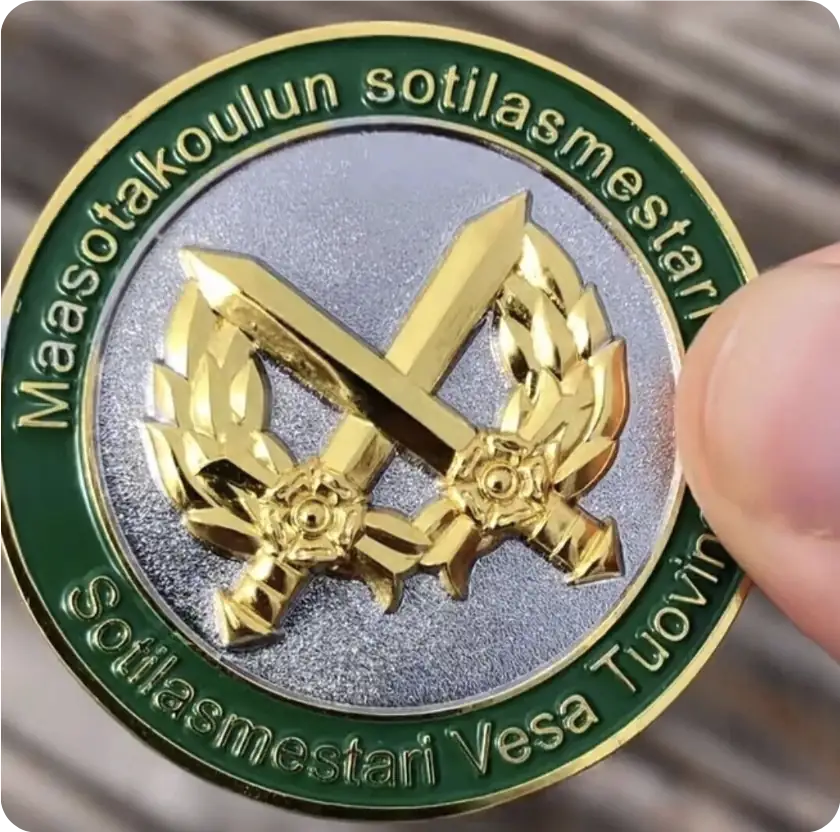
Two-tone plating, also called dual plating, is pretty simple: one pin, two plating colors.
For example, the outside can be gold, while the inside details are silver. Or you can use gold with black nickel if you want the design to look stronger and more bold. The point is not just to add another color. It is to make different parts of the pin stand out.
Some designs look fine with one plating color. But if your pin has a logo, text, border, shield, or center design, two-tone plating can help separate those details. It makes the pin easier to read and gives it more depth.
You see this a lot on challenge coins and police badges. Those pieces usually need a stronger metal look and a more official feel. Gold with silver looks classic. Gold with black nickel feels tougher. Antique gold with polished silver gives you an older look, but still keeps the design from feeling too plain.
Of course, not every pin needs dual plating. If the artwork is simple, one finish may already be enough. But if you want certain details to pop, or you want the pin to feel a little more high-end, two-tone plating is a good option to look at.
Rainbow Plating
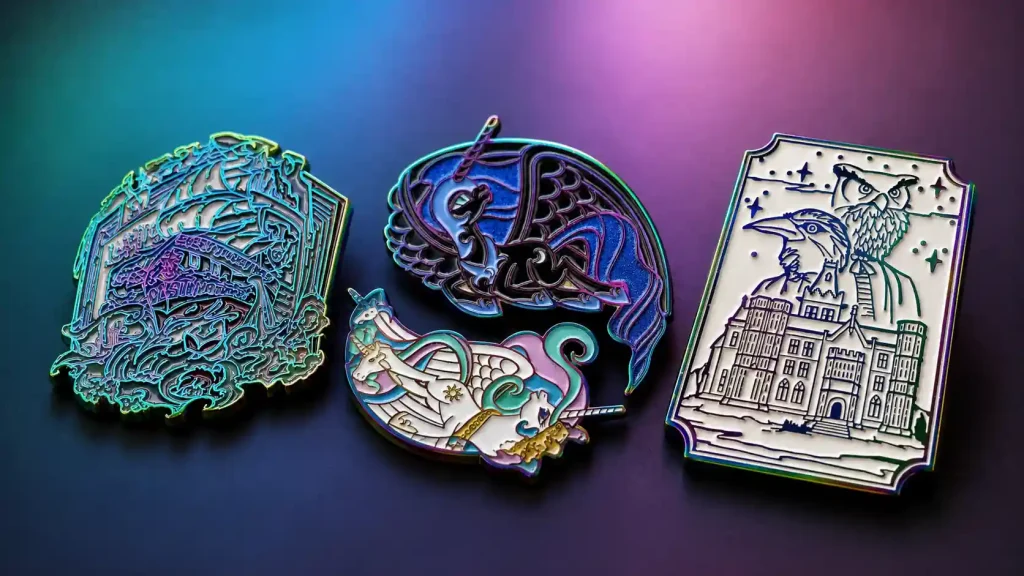
If you want your pins to look a little more special, our rainbow plating is a great way to get attention.
It is not like regular gold, silver, or black nickel. Rainbow plating is made through anodizing and other special surface treatments, which gives the metal a rainbow-like shine. The color can shift a little when you look at it from different angles, so the finished pin feels brighter and more fun.
This finish works really well for designs with a younger, trendier, or more creative style. Think brand event pins, music festival pins, collectible pins, anime-style pins, or any lapel pin that you do not want to look too ordinary.
But to be honest, rainbow plating is not the best fit for every design. If your artwork already has a lot of colors, adding rainbow plating may make the pin look a bit too busy. In that case, we usually suggest keeping the design simpler and letting the rainbow metal finish be the main highlight.
Also, rainbow plating is a more special process. It takes better surface prep and tighter color control than regular plating. The result can look amazing, but it is still better to avoid heavy scratches or harsh chemicals, so the rainbow shine can last longer.
Dyed Metal Plating
Not seeing the plating color you want? No worries. Besides regular finishes like gold, silver, and black nickel, we can also do dyed metal plating.
This is a newer process, and honestly, it solves a problem we see a lot with small lapel pins. Sometimes the design has tiny letters, thin lines, or small logo details, and enamel just cannot fill those areas cleanly.
With dyed metal plating, we can make those small details as raised metal first, then add the color to the metal itself. So instead of forcing enamel into a tiny space, we keep the detail sharp and still get the color you want — like white, black, red, purple, blue, or other custom colors.
This does not mean every design should use it. But when regular plating looks too limited, and enamel is too hard to apply cleanly, dyed metal plating gives us another way to make the design work.
Send us your artwork, and we can tell you if this process is a good fit.

What Should You Know Before Choosing a Plating Finish?
Custom lapel pins can be made with many different plating colors, but not every finish can be mixed together freely. Some special plating effects need to be checked before production, so the final pin does not come out different from what you expected.
Can Two-Tone Plating and Black Dyed Metal Be Used Together?
Here is the simple answer: two-tone plating and dyed metal plating are not the same process, and they cannot always be combined.
If you want a metal-to-metal contrast, like gold with silver, gold with black nickel, or antique gold with polished silver, that is usually done with two-tone plating.
If you want the metal parts to be a specific color, like black, white, red, or blue, that is closer to dyed metal plating.
They may sound similar because both change the metal color, but the way we make them is different. Black dyed metal is a good example. Once that finish is used, it usually cannot be combined with another regular plating color the same way two-tone plating can.
So if your design includes several metal effects, it is better to contact our sales team first. Send us your artwork, and we will help you check which process works better and which color combinations may cause problems in production.
Black Nickel Plating vs. Black Dyed Metal
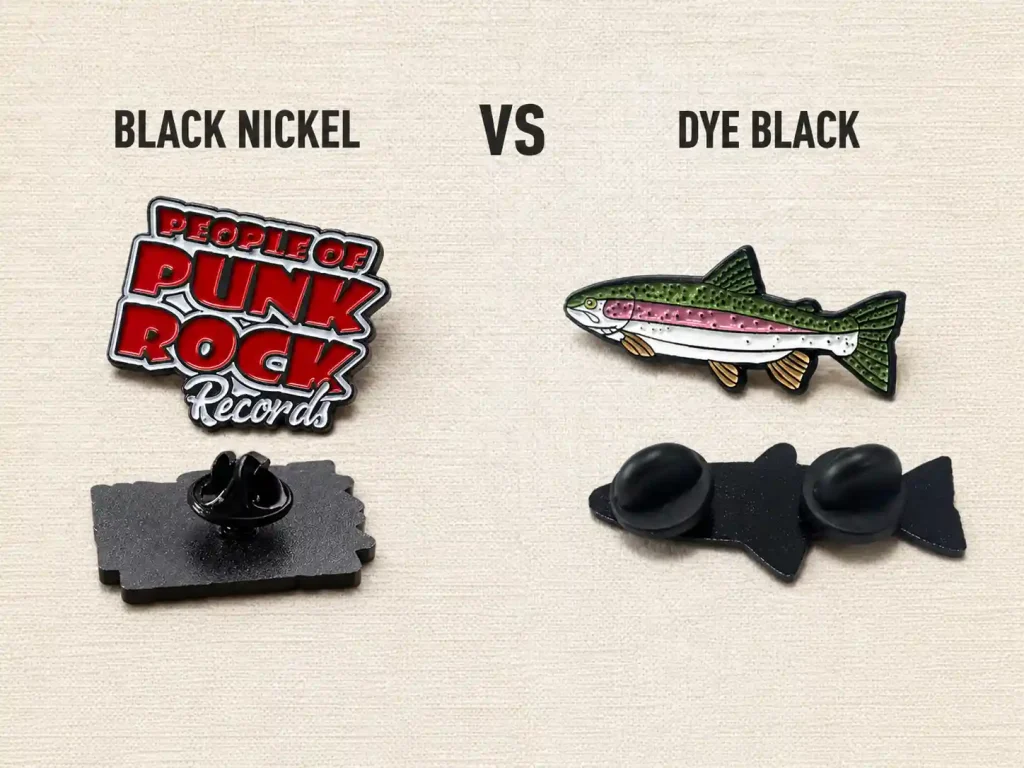
Many customers think black nickel plating means pure black. It does not.
Black nickel looks more like dark gunmetal. It is gray-black, with a little metal shine. It is a good choice if you want your pins to look dark, modern, and still metallic.
Black dyed metal is closer to real black. It works better for tiny text, thin lines, or small logo details when enamel cannot fill those areas clearly.
Simple way to choose:
Want a dark metal look? Choose black nickel.
Want a cleaner black color? Choose black dyed metal.
Still Not Sure Which Plating to Choose?
If you have read through everything and still are not sure which plating color to pick, that is totally fine. It happens a lot, because different designs really do work better with different finishes.
You can contact us or send your artwork through the quote page. Our designers and sales team will take a look with you and help figure out which plating finish fits your artwork, colors, and overall style better.