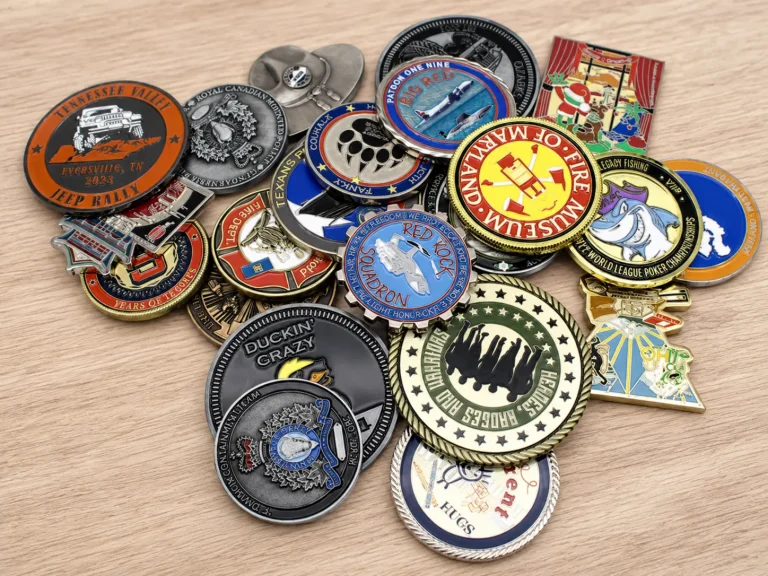
Table of Contents
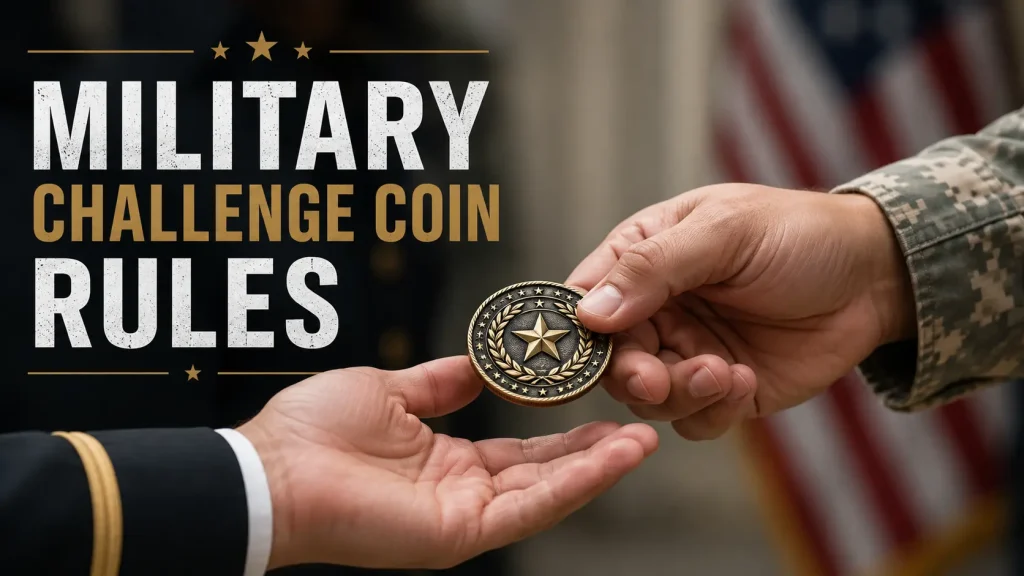
Military challenge coins have a long tradition, but the customs surrounding them can vary from one unit to another. People often ask whether they can buy one, whether they need to carry it, and what happens during a Coin Check.
This guide explains the most common rules and etiquette, while separating widely recognized traditions from practices followed only by certain units.
Are Military Coin Rules Official?
There is no official rulebook for challenge coins issued by the U.S. Department of Defense or individual military branches. How a coin is presented, whether it is carried, and how the tradition is practiced usually depend on the customs of each unit.
Some of these practices are widely recognized, but they remain informal traditions rather than military regulations. The basic Coin Check game is explained later in this article.
How Are They Presented and Received?
Military challenge coins are often given by commanders, senior leaders, or unit representatives to recognize someone’s contribution or mark a special mission. The handoff usually happens in one of the following ways.
Handshake Handoff
This is the most traditional approach. During a handshake, the giver keeps the coin in their palm and quietly passes it to the recipient.
The exchange is quick and understated, reflecting the unspoken understanding shared among service members. It is sometimes referred to as a “secret handshake.”
Formal Ceremony
Coins may also be awarded publicly at graduations, award ceremonies, retirements, or mission debriefs.
A commanding officer or senior leader may briefly recognize the recipient’s contribution before handing over the coin.
The Airman’s Coin Ceremony during U.S. Air Force Basic Military Training is a well-known example. When receiving one, a handshake and a sincere thank-you are usually enough. There is no complicated acceptance ritual.
Delivery by Mail
If the two people cannot meet in person, or the coin was not available at the time, it may be mailed afterward.
Mailing is not part of the traditional ceremony. It is simply a practical way to deliver the coin later or from a distance. The meaning behind it remains the same, even without a face-to-face handoff.
Do You Have to Carry a Challenge Coin?
There is no rule requiring recipients to keep one with them at all times. Many people treat these coins as symbols of honor and display them in a rack, shadow box, or collection case instead.
Some units also make oversized versions that are not practical to carry in a pocket every day. However, if your unit still takes part in Coin Checks, you may choose to keep one on hand.
Please take good care of your coin if you carry it with you. When you’re not using it, keep it in a PVC pouch or display case and store it somewhere dry. Otherwise, it may get scratched or damaged over time.
Coin Check Rules
A Coin Check is one of the best-known challenge coin traditions. The basic game can be explained in three steps.
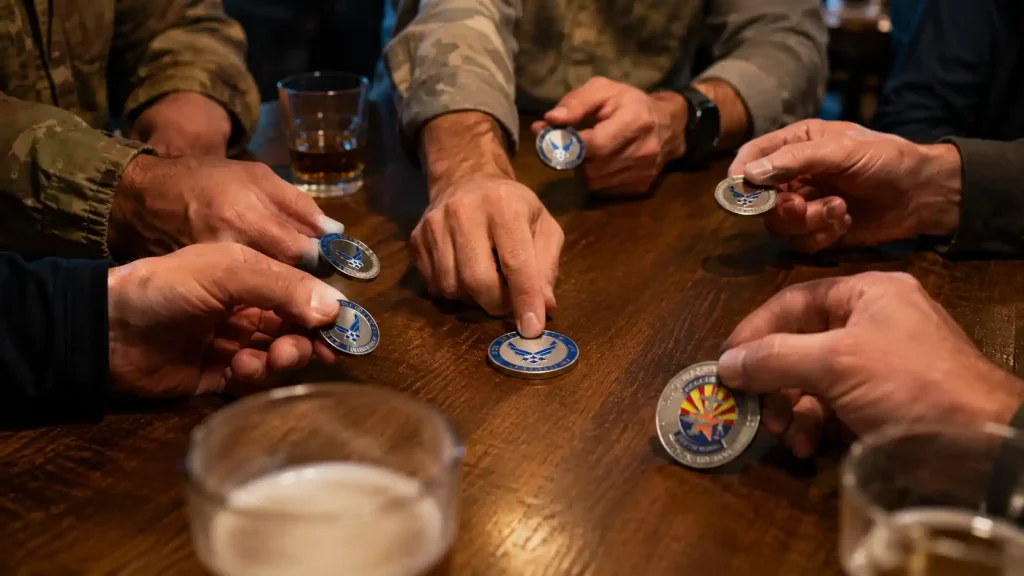
Step 1: Start the Challenge
One person places a challenge coin on the table, taps it against a surface, or calls out, “Coin Check.”
Whether accidentally dropping it also counts depends on the unit and the people involved.
Step 2: Show Your Coin
Everyone taking part must produce the one they are carrying. Borrowing from someone else after the game has started is generally not allowed.
Whether one attached to a keychain or necklace—or one that has been drilled or modified—still counts depends on the group’s rules.
Step 3: Decide Who Buys the Drinks
Anyone who cannot produce one usually buys a round for the group. If everyone has theirs, the person who started the game pays instead.
Not every unit still takes part, and some service members consider the tradition a little old-fashioned. Participation usually comes down to unit culture and personal preference. It is more of a social custom that brings people together than a rule anyone is expected to follow.
Military Coin Etiquette
Although there is no official etiquette guide, a few widely accepted customs have developed over time.
Respect what it represents.
A challenge coin may stand for a unit, mission, or meaningful experience, so treat it with more care than an ordinary souvenir.
Be honest about where it came from.
If you bought or traded for it, do not claim that it was awarded to you for military service, a mission, or an achievement.
Show appreciation when receiving one.
When a commander, veteran, or unit member gives you a coin, a handshake and sincere thank-you are usually enough.
Do not pressure anyone into a Coin Check.
It is a social tradition, not an official requirement. It may not be appropriate in every setting, and participation should always be voluntary.
Share the story behind it.
If you trade or give away a coin with a special history, pass that background along to the next owner.
Ask when you are unsure.
Customs can vary from one unit to another, so do not assume that rules found online apply everywhere.
Why Do People Collect Them?
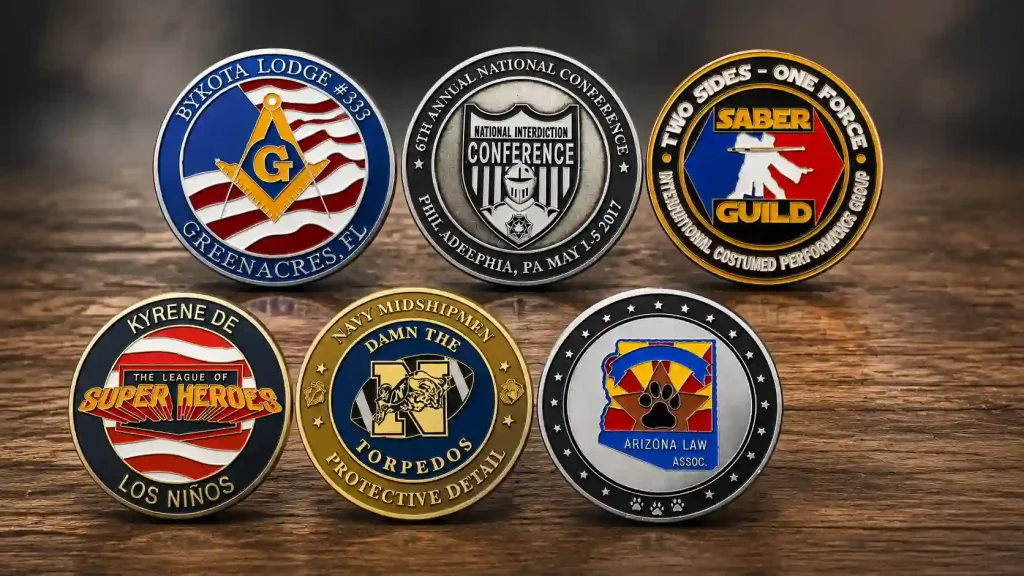
Active-duty service members, veterans, military families, and civilian enthusiasts all collect military challenge coins.
For many of them, the value has little to do with money. What matters is the experience behind each piece. It may represent a unit they served with, a mission they took part in, recognition they received, or the people they worked alongside.
Others are simply drawn to the bold artwork and unique designs. Even without a military background, anyone can build a collection by buying or trading with other enthusiasts.
The important thing is to be honest about where each one came from. Something purchased or traded should never be presented as an award earned through military service.
Turn an Important Experience Into a Coin Worth Keeping
At VeperPins, we believe a challenge coin should be more than a piece of metal. It should preserve meaningful details, tell a story, and become something members will value for years.
Whether it features a unit insignia, motto, number, or a detail only the group understands, we take care to reproduce it accurately. From artwork revisions to the finished piece, we focus on clear text, strong visual depth, and a polished result.
Already have a design or just a rough idea? Send us your requirements for free design assistance and a custom quote.