
Table of Contents
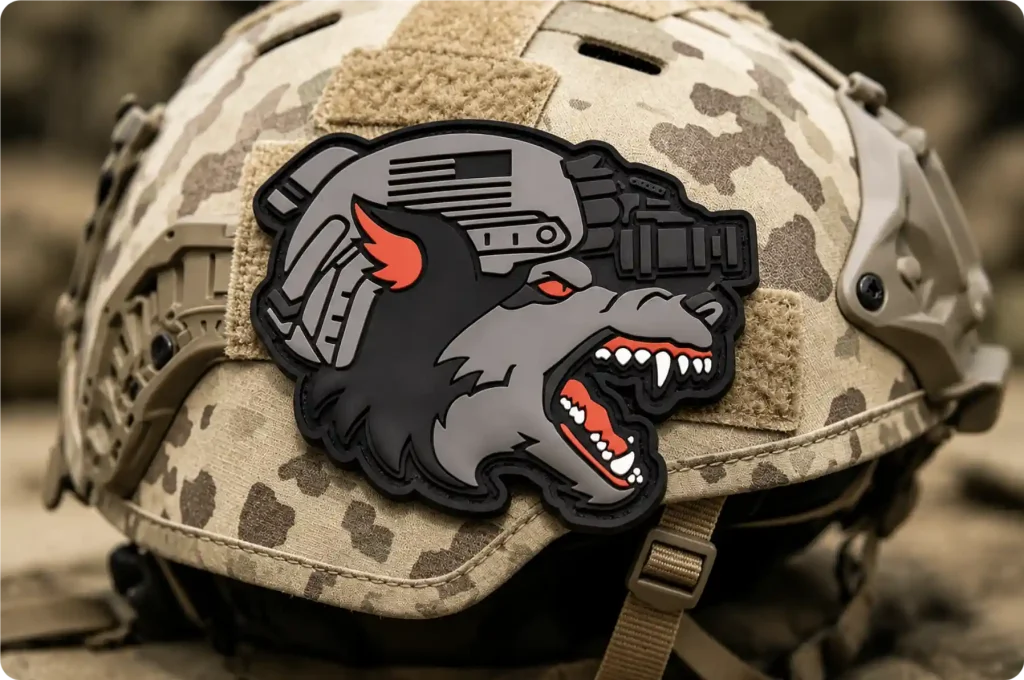
Custom PVC patches have become an essential element for many fashion garments, brand labels, outdoor gear, and tactical equipment.
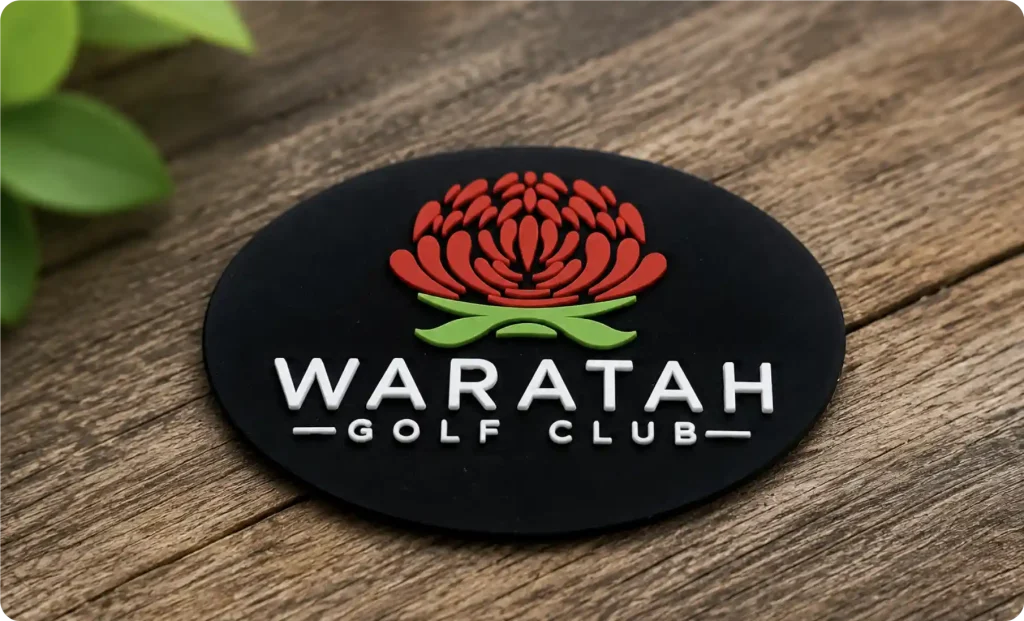
At VeperPins, we turn customers’ logos or designs into stylish, dimensional patches that help your products stand out. With a premium rubber-like texture, matte surface, and bright colors, they follow current trends and are widely loved by the market.
So, how to make PVC patches? Follow our article, and you can complete it in just 6 simple steps.
What Are PVC Patches?
As one type of patch, PVC patches are dimensional patches made from soft polyvinyl chloride plastic.
Colored liquid PVC is first filled into the grooves of an engraved mold, just like squeezing paint into it. Then it is baked at a high temperature until it cures and takes shape. The color comes from the material itself, not from printing, so it will not scratch off or fade.
What Are Its Features?
Soft but shaped: It can bend, but the edges are clean and not fuzzy.
Fully waterproof: No problem even if it is soaked in water.
Strong dimensional effect: The design has raised and recessed details, and both 2D and 3D effects can be made.
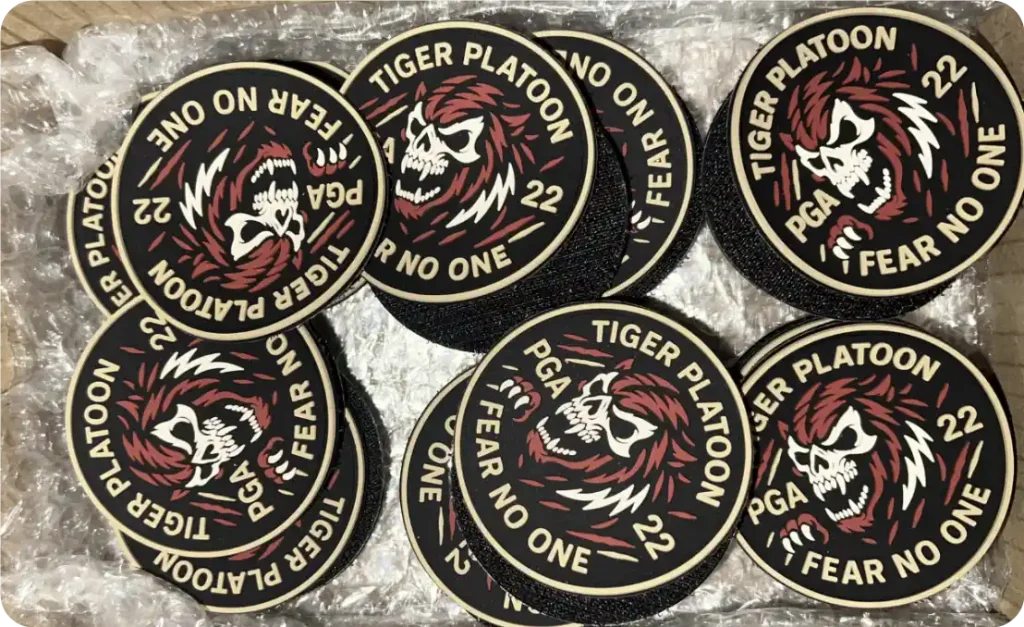
Versatile backing: Usually made with adhesive backing or Velcro backing, easy to attach and use.
How to Make PVC Patches?
Making PVC patches is not difficult. You can follow the 6 steps below.
Step 1: Prepare the Artwork
It does not need to be too professional. Just make sure of two things:
Clear artwork: The lines should be clear, the color boundaries should be easy to see, and the design should not be blurry. JPG, PNG, or a photo of a hand-drawn sketch can all work. The factory can help you convert it into a vector file for free.
Know the colors: Pantone color numbers are best. If you do not have them, you can roughly describe the colors, such as “dark red,” “navy blue,” or “army green,” or send a reference image to the factory.
Step 2: Confirm the Design Details
Before getting a quote, confirm these details first:
Size:
Length × width, such as 2″ × 1.6″. A small tolerance of about 0.04″ is normal.
Thickness:
Regular thickness is 0.08″–0.12″. If you want a stronger 3D feel, choose over 0.12″.
Softness:
You can tell the factory: soft, firm, or standard feel.
Effect:
Choose 2D or 3D.
2D is flatter, with raised outlines.
3D has more raised and recessed details inside the design.
Colors:
One color is the cheapest. 2–4 colors are common. More than 5 colors usually costs more.
Backing:
Adhesive backing: peel and stick, usually for one-time use.
Velcro backing: removable and reusable, often used for uniforms, bags, and tactical gear.
Sew-on backing: best for permanent use on clothing, hats, or bags.
Lines and text:
Lines under 0.02″ may not come out clearly.
English text should be at least 0.12″ high. Chinese characters should be at least 0.2″ high.
Step 3: Find a Factory and Ask for a Quote
When asking for a quote, make sure to ask the following questions. Do not only ask for the unit price:
How much is the unit price per piece?
Does the price include the mold fee?
How much is the mold fee? It is usually around $30–$110, and simple designs are cheaper.
Is there a sample fee? Can it be refunded after bulk production?
How many days for sampling? How many days for bulk production?
What is the minimum order quantity?
Who pays for shipping?
Can they provide an invoice if needed?
It is recommended to ask 2–3 factories at the same time for comparison, because prices can vary a lot.
Step 4: Confirm the Sample
This is the most important step in the whole process. Do not skip it.
After the factory makes the sample and sends it to you, check it carefully:
Are the colors correct? Check under natural light.
Measure the size with a ruler.
Are the edges clean? Is there any color bleeding into another area?
Are there bubbles, black spots, or impurities on the surface?
Is the softness what you want?
Is the backing correct? For Velcro, check the hook side and loop side. For adhesive backing, check whether the glue is strong enough.
Does the dimensional effect meet your expectations?
If there is any problem, tell the factory and ask them to revise it until you are satisfied. Once you approve the sample, the bulk order will be made according to this standard. If there is a problem later, the factory will be responsible.
Step 5: Wait for Bulk Production and Check the Goods
After the sample is confirmed, tell the factory to “produce according to the sample,” and then wait.
After receiving the bulk order, you do not need to check every piece. Randomly check 10–20 pieces:
If the percentage of obvious defects is over 5%, take photos and ask the factory for replacement or rework.
A few small issues are normal, because handmade custom products may have slight imperfections.
Step 6: Choose Packaging If Needed
Packaging is not always necessary, but if you want to give them as gifts or sell them, you can ask the factory to make:
Individual OPP bags: The cheapest option.
Backing cards or paper card packaging: If you have a design, provide the artwork. If not, ask the factory to make a simple version.
Gift boxes: Small quantities may not be available, so you need to ask first.
Can You Make PVC Patches at Home?
You can make them at home, but only roughly.
The easiest way is to buy ready-made silicone molds, fill them with UV resin, add color, and then cure them with a UV lamp for a few minutes. The result will be a hard plastic patch, not as soft and flexible as real PVC patches, and it may break if bent hard.
If you want to make real soft and flexible PVC patches at home, you need professional materials and high-temperature baking. This may release toxic fumes, and a home oven cannot handle it. Do not try it.
But you can contact VeperPins to help you make them.
Create Personalized PVC Patches
Want to make custom PVC patches for your brand?
Send us your design, and VeperPins will help you choose the right size, colors, backing, and finish. Whether they are used on apparel, bags, uniforms, or outdoor gear, PVC patches are made to look clean, last longer, and feel comfortable in daily use.
For bulk orders, visit our quote page to get a custom price.


