Table of Contents
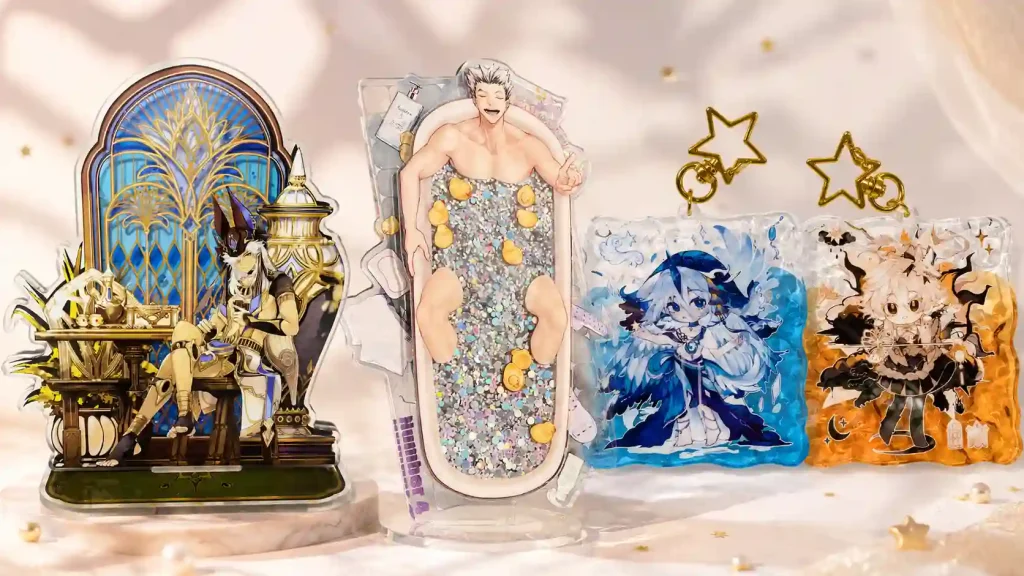
Looking for a gift that feels personal without costing a fortune? Custom acrylic keychains are a great option.
Compared with metal keychains, acrylic pieces usually don’t require metal molds. That makes them more affordable for small batches, multiple designs, and full-color artwork. Since each outline can be laser-cut rather than individually molded, acrylic is also a practical choice for custom shapes.
So how do you make one? Follow these five steps to create an acrylic keychain that looks good, holds up well, and stays within your budget.
What Is an Acrylic Keychain?
Before you start designing, it helps to understand how acrylic keychains are made.
Most are cut from sheets of PMMA, or polymethyl methacrylate. A logo, photo, character, or illustration is printed on the surface or sealed between layers of acrylic. The piece is then laser-cut to shape and finished with the hardware of your choice.
High-quality clear PMMA can transmit up to about 92% of visible light, which helps small text, facial features, and detailed illustrations stay clear and easy to see.
Acrylic is lightweight, easy to cut, and works well with full-color printing. That makes it especially popular for anime merchandise, promotional giveaways, and event souvenirs.
It is not completely scratch-proof, though. If it regularly rubs against keys or other hard objects, the surface may pick up scratches over time.
Step 1: Choose a Design Style
The artwork is only one part of the final look. The way you use the front and back, the surface finish, and any moving elements can all change how the finished piece feels.
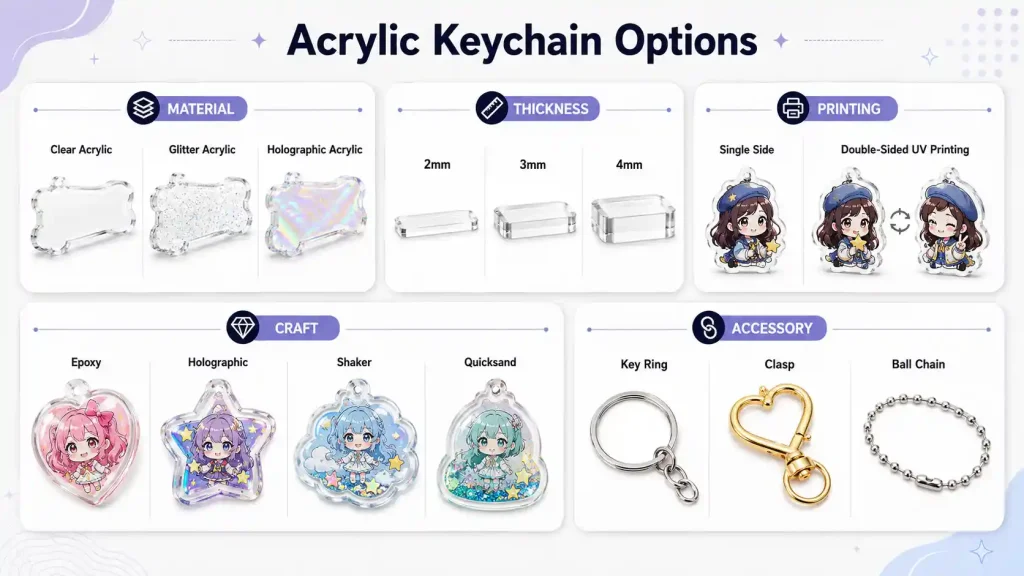
Here are a few common design styles:
Epoxy-coated: A clear resin coating can be added to one or both sides. It gives the surface a slightly raised, rounded feel while making the colors look brighter.
Holographic or glitter: A holographic film or glitter effect is added to the acrylic. Options may include cracked glass, starry sky, or rainbow patterns that shift as the viewing angle changes.
Double-sided: The front and back can feature different expressions, outfits, or views of the same character. It is an easy way to fit two pieces of artwork into one item.
Layered or interactive: Multiple laser-cut pieces can be used to create moving parts. You can also make shaker-style designs filled with glitter or small decorative pieces for a more playful effect.
Step 2: Choose the Right Production Method
Some acrylic keychains look great when they are new but start showing worn artwork or peeling edges after a few months. This usually comes down to where the artwork is placed and how the piece is constructed.
At VeperPins, we recommend a production method based on your design, how the keychain will be used, and how much wear it needs to handle.
Are Holographic Keychains Durable?
The shifting rainbow effect looks great, but one of the first questions people ask is whether it scratches easily.
The answer depends on how it is made.
The simplest method is to apply holographic film directly to the surface. After repeated rubbing, the film may become scratched, lift around the edges, or peel in spots.
A more durable option is to seal the artwork and holographic layer between two pieces of acrylic. Everyday friction then affects the outer acrylic instead of the design underneath. A clear epoxy coating can also be added if you want extra surface protection.
For normal use as a bag charm, a properly sealed holographic keychain should hold up well without the artwork wearing away quickly.
Laser Engraving or Printing: Which Lasts Longer?
These methods are suited to different kinds of designs. Laser engraving offers better wear resistance, while printing is the better choice for detailed, full-color artwork.
| Feature | Laser Engraving | Printing |
|---|---|---|
| Wear resistance | Very high. The design is engraved into the acrylic rather than printed on top. | Depends on the printing method. Surface-printed artwork is more exposed to rubbing. |
| Fading | There is no printed ink to fade. | Color life depends on the ink, print placement, and environment. |
| Artwork protection | No ink layer to peel or flake. | Surface printing is exposed; artwork sealed inside the acrylic is better protected. |
| Best for | Names, line art, and simple logos | Full-color artwork, gradients, characters, and detailed illustrations |
If your design is mainly a name, logo, or simple line drawing—and durability is the priority—laser engraving is usually the easiest choice.
Anime characters and colorful illustrations are better suited to printing. For better protection, the printed layer can be placed inside the keychain and covered with another clear acrylic layer. This keeps daily friction away from the artwork itself.
For color printing, also ask whether the manufacturer uses a white ink underbase. It makes a noticeable difference in skin tones, pale colors, and highlighted areas.

What to Look for When Making Anime Keychains
Anime and character artwork usually has finer lines and more colors than a basic logo. If the material or printing quality is poor, small facial features, hair details, and clothing elements can easily get lost.
There are three things worth checking with your manufacturer.
First, ask what type of acrylic they use.
Character artwork benefits from a clear, flat surface, so we generally prefer cast acrylic. A good-quality sheet keeps outlines, hair strands, and other small details looking clean. If a manufacturer only says it uses “high-transparency acrylic,” ask what type of sheet it actually uses.
Second, confirm the finished thickness and how the artwork will be protected.
For a detailed design, consider a construction that keeps the printed layer away from direct wear. At the same time, make sure the finished piece will not be too thick or heavy for everyday use.
Third, ask about the white ink underbase.
Clear acrylic lets light pass through it. Without white ink behind the color layer, skin tones and other pale areas may look washed out or overly transparent. A white underbase gives the colors more opacity and helps the character details stand out.
Step 3: Make the Keychain More Durable
Surface protection, shape, hole placement, and hardware all affect how long an acrylic keychain lasts.
Do You Need an Epoxy Coating?
An epoxy coating adds another layer of surface protection and gives the keychain a smoother, more rounded feel.
It can be helpful if the piece will hang from a bag and regularly rub against other items. If it is mainly for display, the extra coating may not be necessary.
More importantly, make sure the artwork itself is protected. A printed design sealed inside the acrylic will usually hold up better than exposed surface printing, even without several additional coatings.
Why Does the Hanging Hole Matter?
The area around the hanging hole carries a lot of stress.
If the hole is too close to the edge, there may not be enough acrylic around it. Repeated pulling and swinging can eventually cause a crack.
For narrow designs, we may suggest moving the hole slightly or adding a little more material around it. The visual difference is usually minor, but the structure will be much stronger.
Choose Hardware Based on How You Will Use It

There is no single hardware option that works best for every design.
For bag charms, a swivel clasp or lobster clasp is convenient. A swivel allows the charm to rotate more freely and reduces twisting, while a lobster clasp is easy to attach and remove.
If the piece will stay on a set of keys, a standard split key ring is usually the more secure option.
Avoid Overly Thin Sections and Sharp Points
Hair tips, ribbons, weapons, tails, and ears are common weak points in character designs. If these areas are too narrow, they are more likely to snap when the keychain is dropped or bumped.
Slightly widening these sections or softening the outer contour usually has very little effect on the overall look, but it can make a real difference in durability.
Step 4: Decide on the Size, Thickness, and Quantity
Bigger Is Not Always Better
It is easy to assume that a larger keychain will look more substantial or offer better value, but that is not always the case.
For a simple logo, text, or basic shape, 2 to 2.5 inches is a common size range. A larger size is usually only necessary when the artwork includes detailed characters, small lettering, or several fine lines that need more room.
Larger pieces also use more material, weigh more, and may cost more to ship. There is no reason to increase the size simply to make the product feel more premium.
Choose a Practical Thickness
The same rule applies to thickness.
Layered pieces, double-sided designs, and detailed character keychains may benefit from a little extra thickness because it gives them a more solid feel.
Going too thick, however, adds weight and cost. A standard thickness is usually enough for an everyday bag charm. For promotional giveaways or large orders, paying for a few extra millimeters may not add much practical value.
Quantity Affects the Unit Price
Custom pricing usually decreases as the quantity goes up.
Artwork preparation, machine setup, and production testing involve fixed costs. With a larger order, those costs are spread across more pieces.
If your project includes several characters or logos, send the manufacturer the total quantity along with the number of designs. It may be possible to combine them into one quote.
That said, do not order more than you need just to get a lower unit price. The total project cost matters more than the price of one keychain.
Where Is the Money Best Spent?
If you want a durable product without overspending, focus your budget on the features that make a practical difference:
- Protecting printed areas that are likely to rub or scratch
- Adding a white ink underbase to detailed, full-color artwork
- Choosing hardware that fits the way the keychain will be used
- Widening thin points and weak connection areas
Not every available upgrade is necessary. Good value does not come from adding every possible feature. It comes from spending money on the details that actually improve durability and print quality.

Step 5: Choose the Right Manufacturer
Price matters, but it should not be the only factor. Before choosing a supplier, ask a few practical questions.
Can they show real finished products?
Ask to see products they have actually made, especially ones similar to your design.Will you approve the artwork first?
Confirm the size, colors, hole placement, hardware, and printing before production begins.Can they give you a clear timeline?
Check both production and shipping time, especially if you have a fixed deadline.
Do they provide quality control and support?
Make sure they inspect the products before shipping and explain how defects or missing items are handled.
At VeperPins, production starts only after artwork approval, and finished products are inspected before shipping. If you have multiple designs, send them together with the quantities so we can quote the project as a whole.
Frequently Asked Questions
Quick answers to a few common questions about custom acrylic keychains.
What File Should I Send for My Acrylic Keychain Design?
Vector files such as AI, SVG, or PDF are ideal for logos and line art. For photos or illustrations, send the highest-resolution PNG or JPG you have.
Can Each Acrylic Keychain Be Personalized?
Yes. Names, numbers, dates, or other small details can be added by printing or laser engraving, depending on the design.
How Should I Clean an Acrylic Keychain?
Use a soft cloth with a little water or mild soap. Avoid abrasive cleaners or rough materials that may scratch the acrylic surface.


